

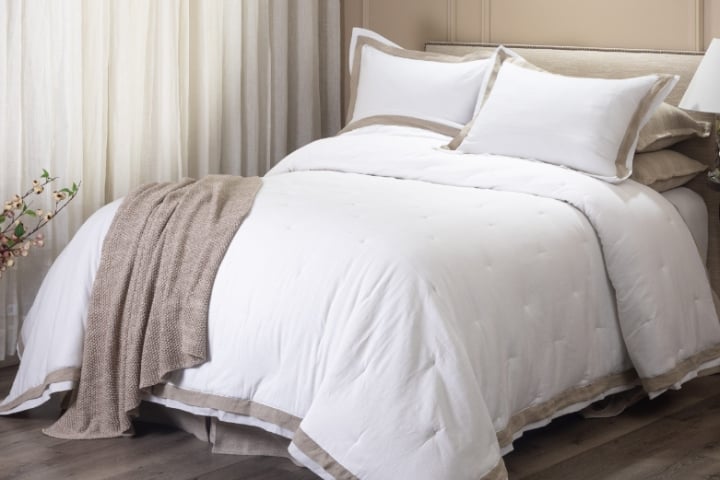
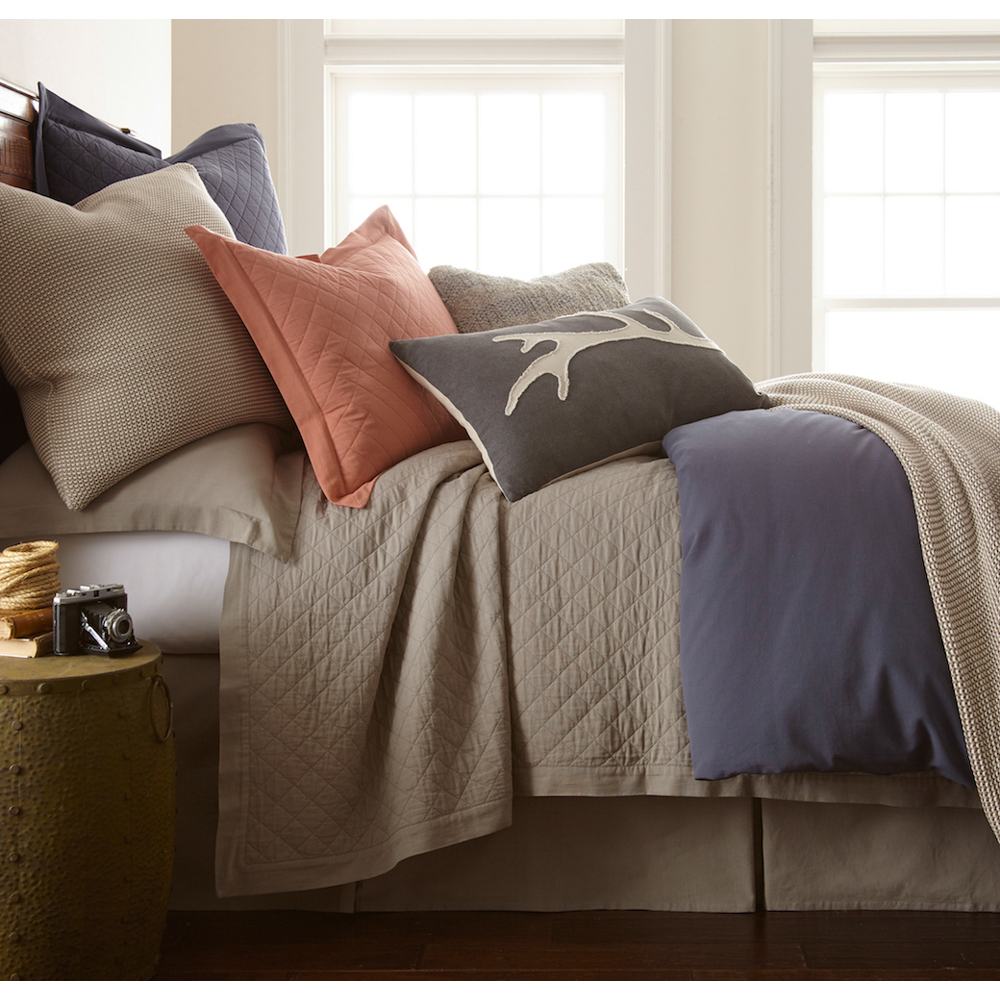
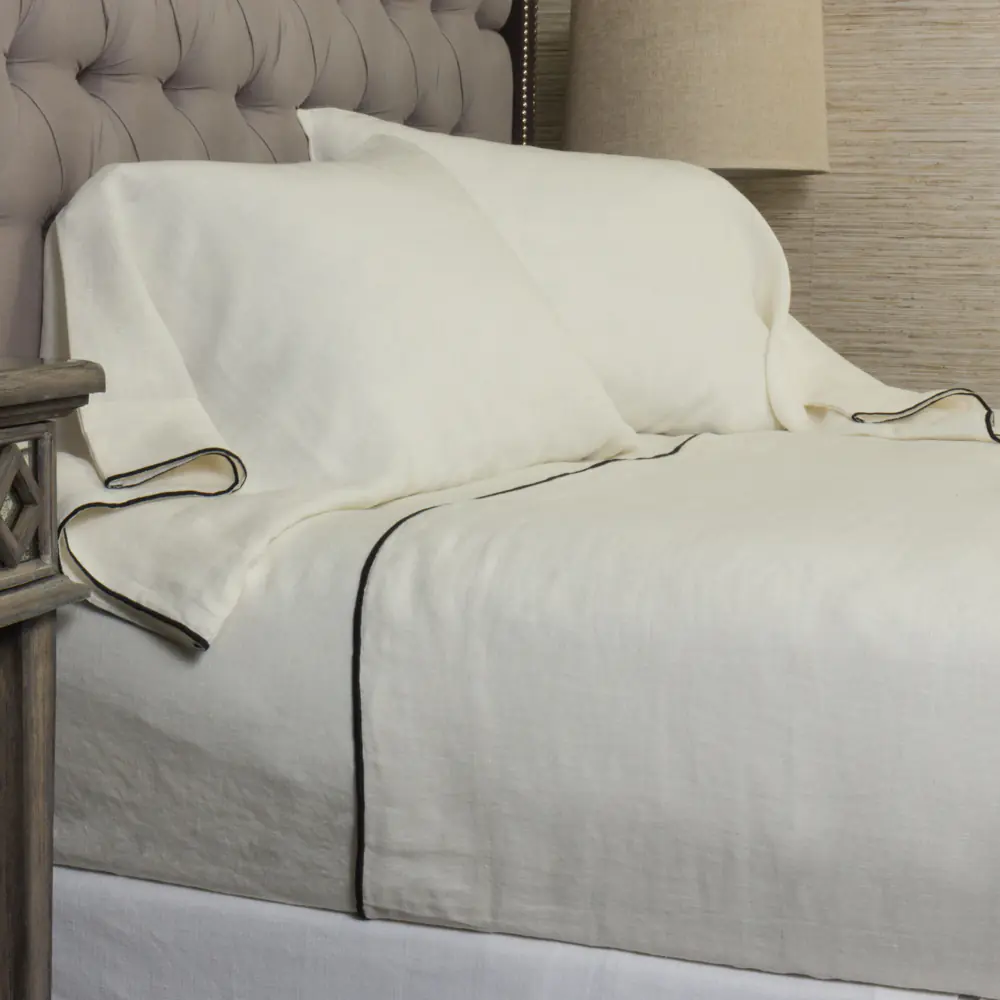
The sheet is the layer closest to your skin. It is the first thing you feel when you climb into bed and the last thing you notice before sleep. When that sheet is made from the right fibre — one that breathes, softens with time, and carries the quiet confidence of real craft — the entire bed changes. Choosing the best bedding material for luxury sheets is not about chasing the highest thread count or the trendiest fibre name. It is about understanding which natural materials earn their softness, season after season, wash after wash.
Amity Home has worked in cotton, linen, silk, viscose, and wool for nearly three decades. These five fibres are the foundation of every sheet set, quilt, and coverlet we make. Here is a guide to each one — what it feels like, how it wears, and when it belongs in your bed.
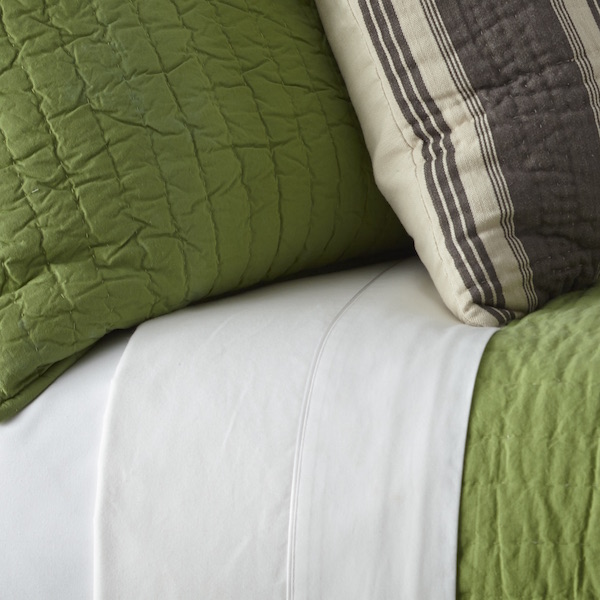
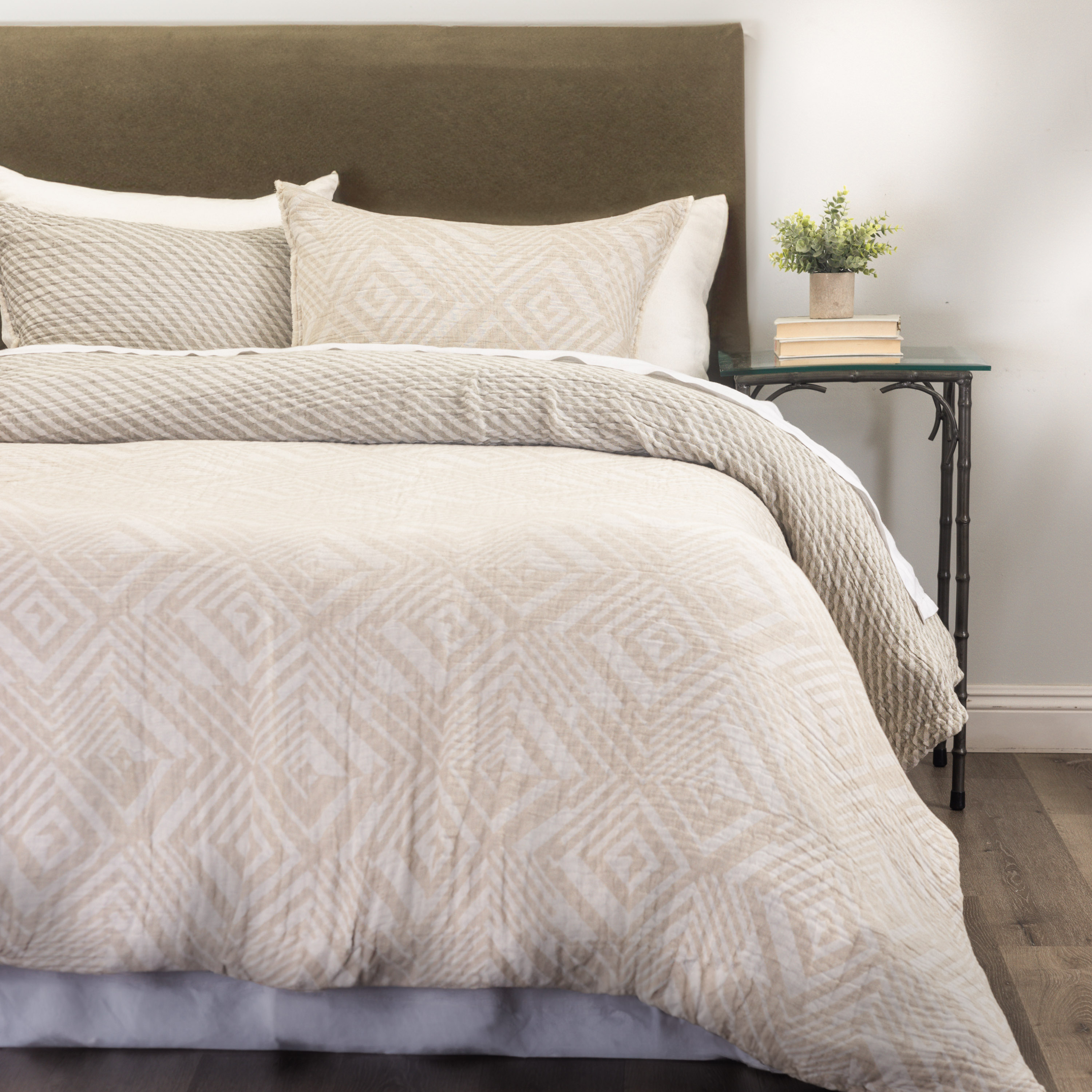
Cotton is the most familiar fibre in bedding, and for good reason. It breathes. It launders beautifully. It arrives soft and grows softer with every cycle through the washing machine. Pre-washed cotton — the kind Amity Home uses — skips the stiff, sizing-coated phase entirely. The sheet comes home ready, with the quiet surface character that signals a bed someone actually sleeps in, not a showroom display.
What makes cotton one of the best bedding materials for luxury sheets is its versatility. A cotton sheet works in every season, layered under a quilt in winter or standing alone in summer. It pairs naturally with every other fibre in the Amity Home palette — linen, silk, viscose, wool — which is why cotton sheet sets anchor nearly every named collection we offer.
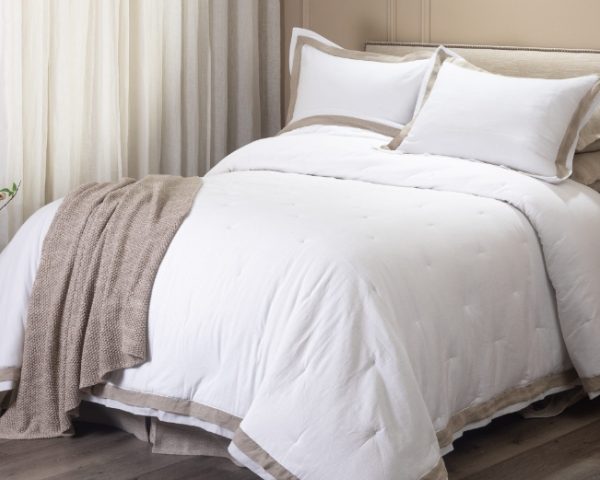
The Isabella Sheet Set brings pre-washed cotton with a raw-edge ruffle detail — a small gesture that keeps the look warm rather than clinical. Available in Petal Pink, White, and Ivory. The French Ruffle Sheet Set pairs cotton with a linen ruffle trim, adding just enough texture at the edge to make the foundation feel finished. For those drawn to a tailored look, the Camden Sheet Set offers crisp white cotton with a rich contrast border — the kind of sheet that belongs in a heritage hotel room.
Cotton is also the fibre that rewards patience. A cotton sheet in year three feels different from a cotton sheet in month one — not worn, but lived-in. The hand softens. The surface develops a faint, even patina. This is the quality that separates natural fibres from synthetic ones, and it is the reason cotton remains the starting point for anyone serious about luxury bedding.
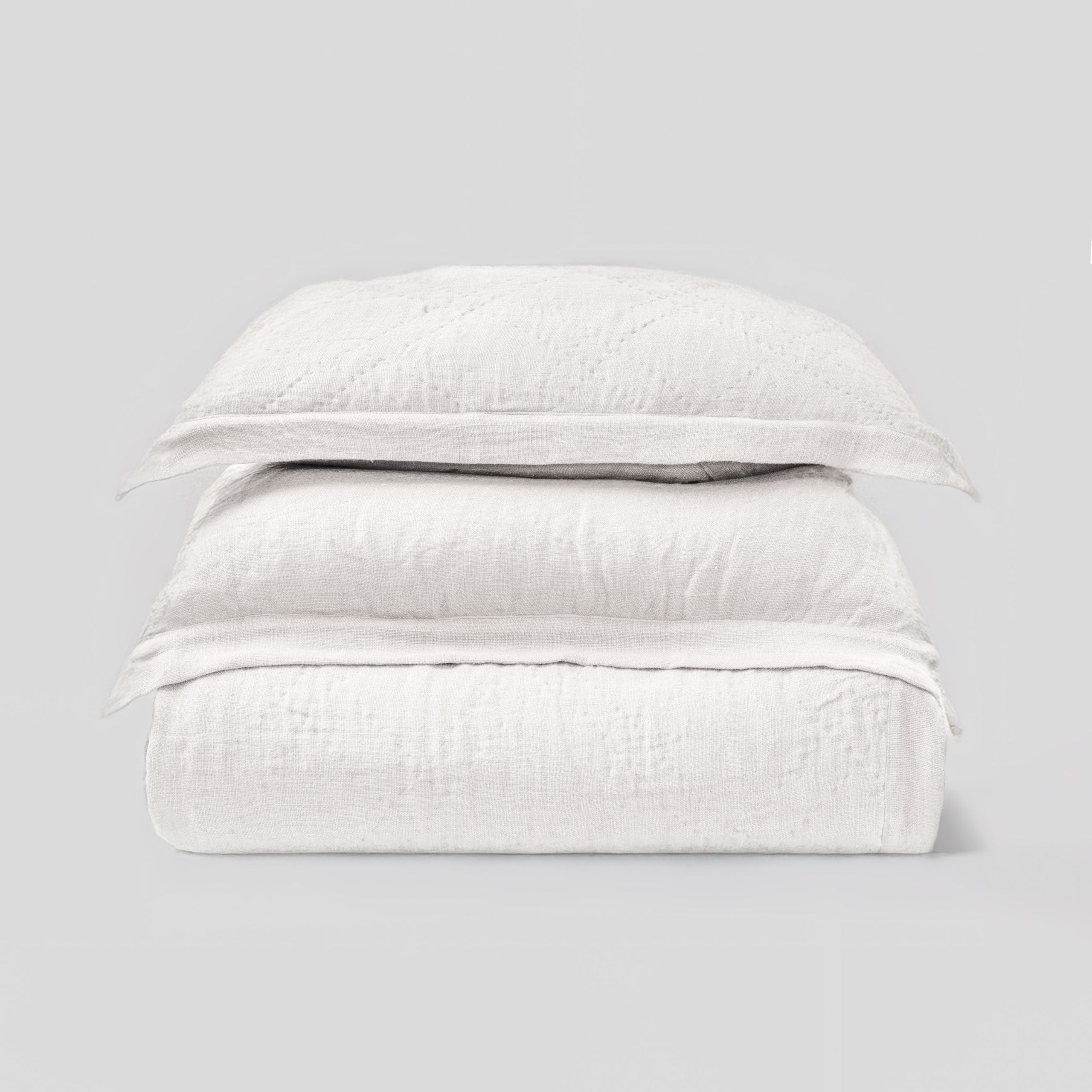
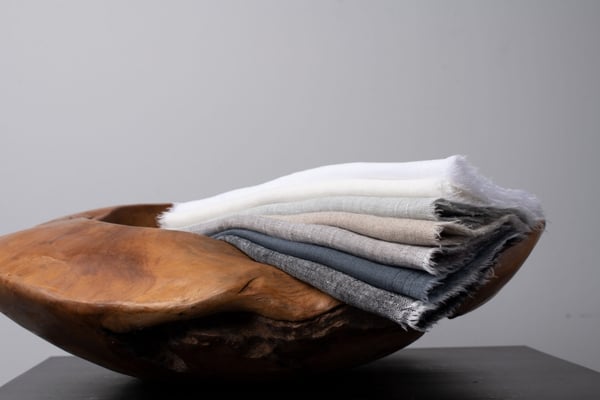
Linen does not try to be smooth. That is its strength. Where cotton aims for evenness, linen embraces texture — a slightly rumpled surface that reads as relaxed, lived-in, and quietly confident. For homeowners and designers who want a sheet that looks as good crumpled as it does pressed, linen is the answer.
As a best bedding material for luxury sheets, linen brings something cotton cannot: a natural weight that drapes rather than floats. Linen fibres are thicker and longer than cotton fibres, which gives the fabric a substantial hand and a breathable openness. Air moves through linen easily, which is why it has been the warm-weather sheet of choice for generations.
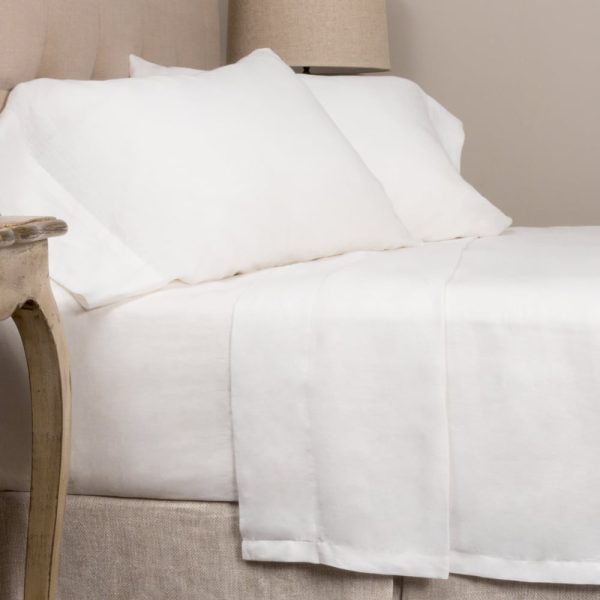
The Tyne Linen Sheet Set is Amity Home’s linen anchor — pre-washed, with an embroidered edge in khaki or steel blue that adds a considered detail without overworking the look. The Brisbane Linen Sheet Set offers a cleaner, unadorned linen for those who prefer the fibre to speak for itself.
Linen softens dramatically over time. The first wash takes the stiffness out. The twentieth wash gives it the drape of a favourite shirt. By the fiftieth, it has the kind of softness that cannot be manufactured — only earned. For a deeper comparison of these two natural fibres, read our guide to Cotton vs Linen Sheets: Which Is Better?
Silk does not shout. It whispers. The surface of a silk sheet catches light in a way no other fibre can — a low, warm lustre that reads as luxury without needing a label to prove it. In a bedroom layered with natural materials, silk is the accent that elevates the whole composition.
Among the best bedding materials for luxury sheets, silk occupies a singular position. It is the most delicate fibre in the Amity Home palette, and the most rewarding. Silk fibres are naturally smooth — each filament is a continuous strand, which means there are no short ends to irritate the skin. The result is a surface that feels cool and fluid, almost weightless against the body.
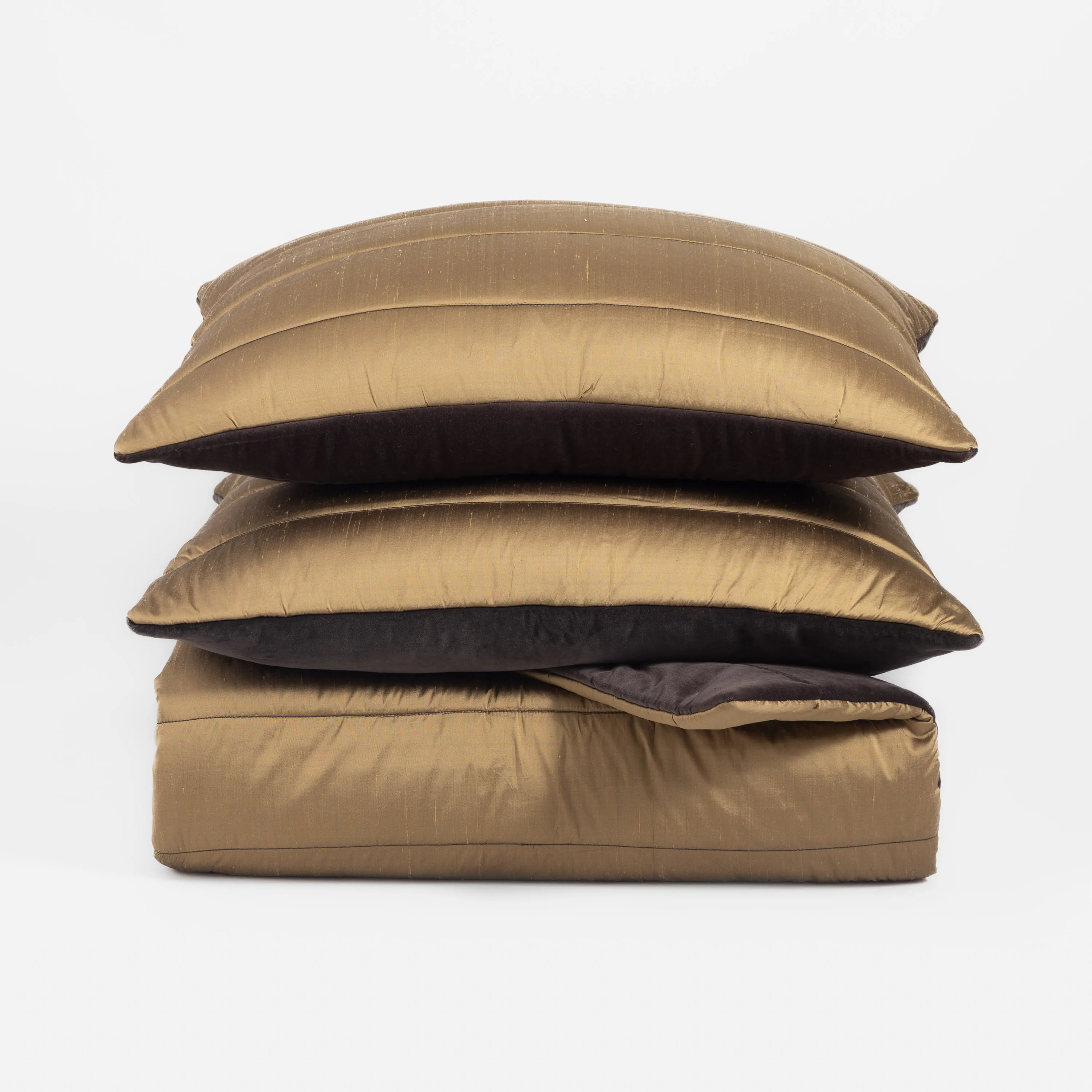
Amity Home works silk into bedding as a layering fibre rather than a full-sheet fibre. The Alexandra Silk & Velvet Quilt pairs silk with velvet in a reversible design — ochre silk on one side, charcoal velvet on the other, channel-stitched for structure. The Caressa Beautycase brings silk to the pillow, where its smooth surface is most appreciated night after night.
Silk requires more care than cotton or linen — gentle washing, air drying, a lighter hand. But the return is a fibre that ages with grace. A well-cared-for silk piece develops a softer lustre over time, the way a pearl develops depth. It is not the fibre for every night, but for the nights that matter, nothing else comes close.
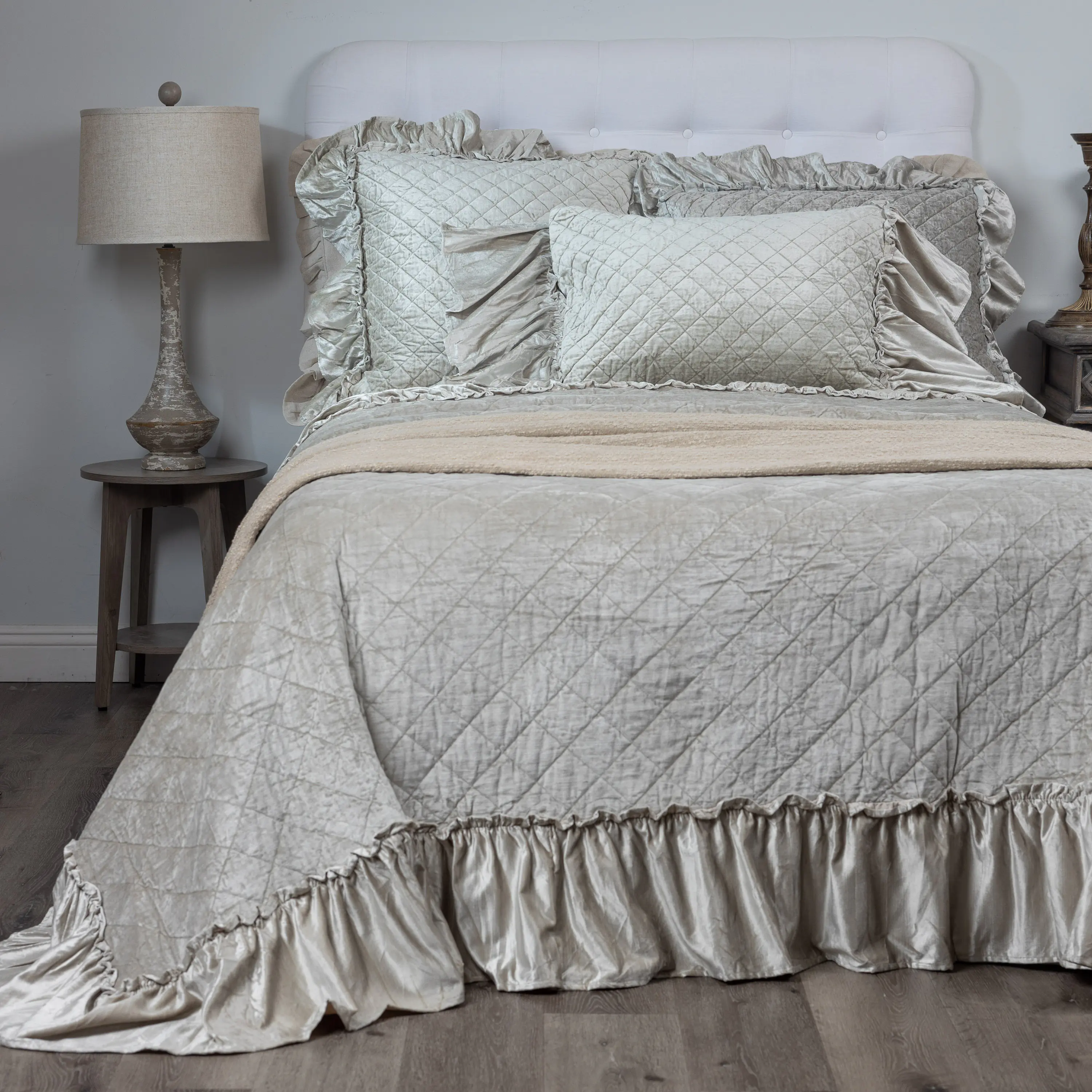
Viscose is the fibre most people recognise without knowing its name. It is the material behind the lustrous, heavy-drape quilts and coverlets that give a bed its visual weight — the kind of piece that photographs beautifully and drapes with a generosity that cotton alone cannot match.
As one of the best bedding materials for luxury sheets, viscose brings a specific quality: sheen without shine. Where silk gleams, viscose glows. The surface has a low, warm lustre that reads as sophisticated rather than flashy. It is a fibre that works best in layered compositions — a viscose quilt over a cotton sheet, a viscose-accented coverlet folded at the foot of the bed.
The Estrella Quilt is Amity Home’s signature viscose piece — lustrous viscose velvet quilted in a classic diamond pattern, finished with ten inches of ruffles for an Old World aesthetic. The Christelle Peacock Quilt uses 100% viscose in a rich teal satin, paired with ribbed texture for depth. Both pieces demonstrate what viscose does best: carry colour with richness and drape with weight.
Viscose is not a fibre for the fitted sheet. It belongs in the layers above — the quilt, the coverlet, the decorative sham. When you see a bed that looks like it belongs in a design magazine, the piece that gives it that pulled-together weight is almost always viscose. For more on how these layers work together, see our guide to Best Luxury Bedding Sets.
Wool is the fibre that completes the bed. It does not belong in the sheet layer — wool sheets are rare and an acquired taste — but as a throw, a blanket layer, or a quilted accent, wool brings a weight and warmth that no other natural fibre can replicate.
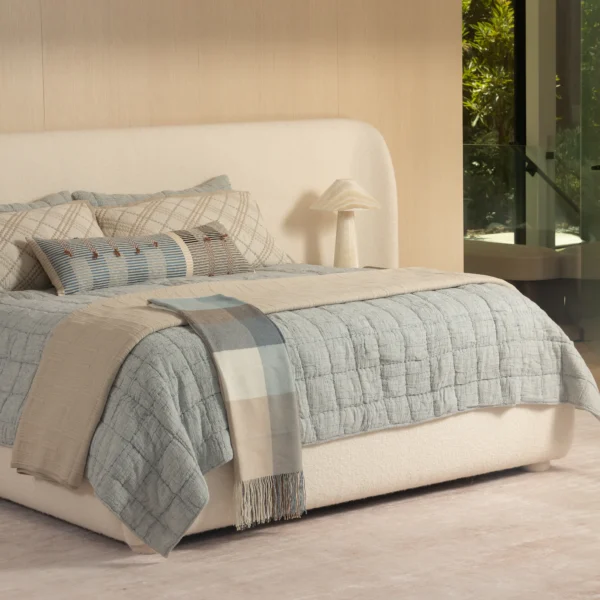
In the conversation about the best bedding material for luxury sheets, wool earns its place as the seasonal anchor. A wool throw at the foot of the bed changes the entire composition. It adds visual weight to the lower third of the bed, creates a textural contrast against cotton or linen sheets, and provides the kind of warmth that a down comforter alone does not — the warmth of weight, not just insulation.
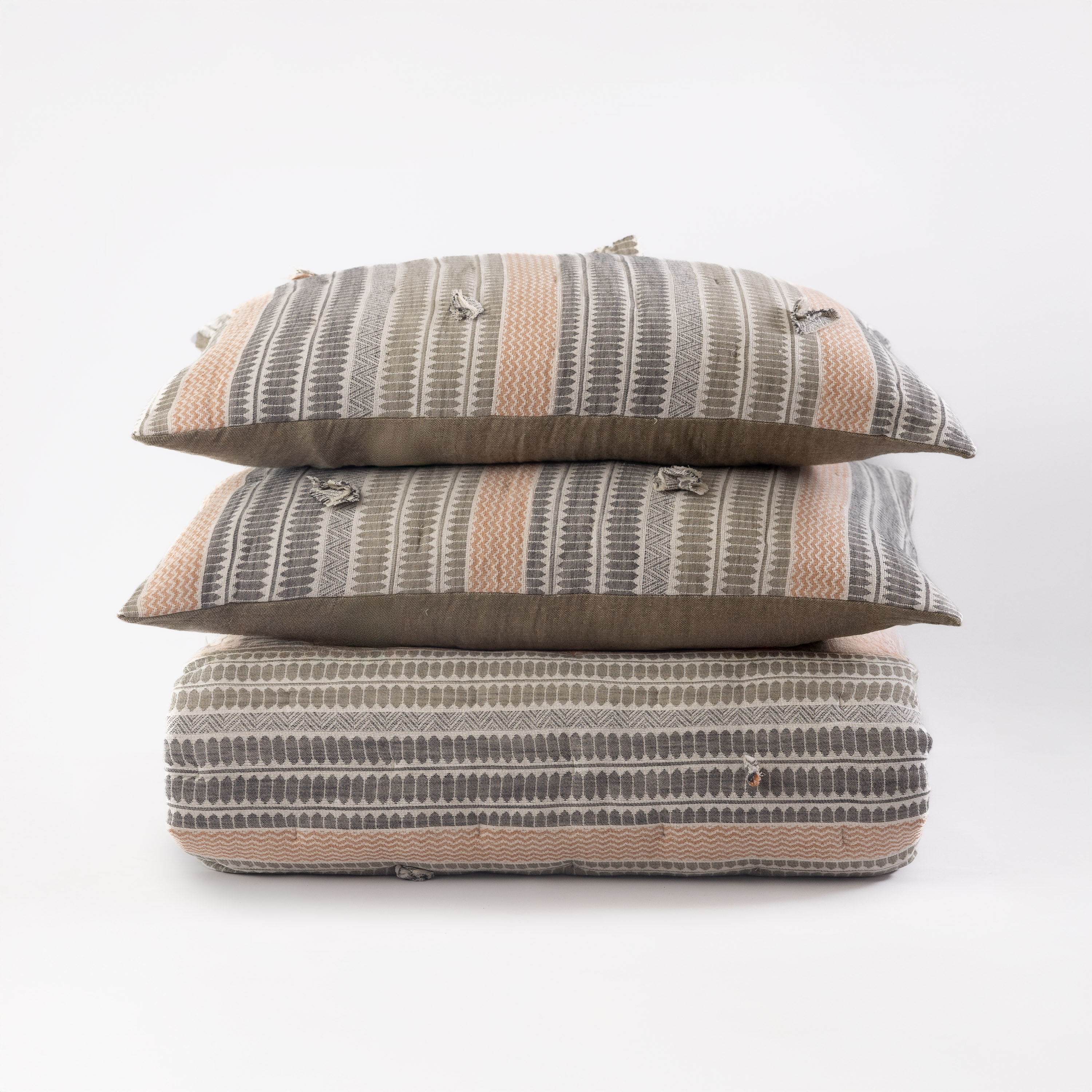
The Luca Merino Throw is Amity Home’s merino wool accent — soft enough to keep on the bed year-round, warm enough to matter when the temperature drops. The Daly Super Throw in 100% wool brings a herringbone weave and natural fringe, the kind of piece that looks as good draped over a reading chair as it does folded at the foot of the bed. The Tuva Throw works wool into a mid-century modern stripe with fringed ends — a bridge between heritage craft and contemporary design.
Wool is also the most forgiving fibre in the Amity Home palette when it comes to care. A wool throw does not need frequent washing. It needs airing, the occasional spot clean, and the kind of gentle respect that natural fibres have always deserved. For more on how to layer wool with other materials across seasons, read our guide to luxury winter bedding layers.
Choosing the right fibre is not about finding the single best option. It is about matching the material to the moment, the room, and the way you actually live in your bed. Here is a simple framework:
Interior designers who specify Amity Home bedding follow this instinct naturally — fibre quality over thread count, seasonal layering over single-piece solutions, durability specifications that hold up to real use. For a deeper look at how designers make these choices, read How Interior Designers Choose Luxury Bedding for Clients.
The common thread across all five fibres is this: they are natural. Cotton, linen, silk, viscose, and wool all share a quality that synthetic fibres cannot replicate — they improve with time. A polyester sheet feels the same on day one as it does on day one thousand. A cotton sheet, a linen sheet, a silk pillowcase — these fibres develop character. They earn their softness in the wash, the way a favourite quilt earns its patina.
Amity Home has built nearly three decades of craft on this principle. Natural materials. Skilled artisans. Heirloom quality. Every sheet set, every quilt, every throw is pre-washed so it comes home ready — not stiff, not coated, not waiting to be broken in. The softness is there from the first night, and it only deepens.
When you choose the best bedding material for luxury sheets, you are not just choosing a fabric. You are choosing how your bed will feel in a year, in five years, in the season when the quilt comes out and the wool throw goes back on. You are choosing fibres that will still be beautiful long after the trend has moved on. That is the difference between a sheet and a luxury sheet — and it starts with the material.
For more on building a layered bed with these materials, see our guide to 7 Ways to Make Your Bed Look Like a Luxury Hotel Room and our Ultimate Guide to Matelassé Coverlets.
No account yet?
Create an AccountWe use cookies to improve your experience on our site. By using our site, you consent to cookies.
Manage your cookie preferences below:
Essential cookies enable basic functions and are necessary for the proper function of the website.
CloudFlare provides web performance and security solutions, enhancing site speed and protecting against threats.
Service URL: developers.cloudflare.com (opens in a new window)
These cookies are used for managing login functionality on this website.
UserWay is an AI-powered accessibility widget that scans a website for WCAG and ADA accessibility issues and gives visitors on-page tools to adjust contrast, font size, navigation, and other display settings.
Service URL: userway.org (opens in a new window)
WooCommerce is a customizable eCommerce platform for building online stores using WordPress.
Statistics cookies collect information anonymously. This information helps us understand how visitors use our website.
Clarity is a web analytics service that tracks and reports website traffic.
Service URL: clarity.microsoft.com (opens in a new window)
Google Analytics is a powerful tool that tracks and analyzes website traffic for informed marketing decisions.
Service URL: policies.google.com (opens in a new window)
Clarity is a web analytics service that tracks and reports website traffic.
Service URL: clarity.microsoft.com (opens in a new window)
Track user interactions on your site with to optimize engagement and conversions.
SourceBuster is used by WooCommerce for order attribution based on user source.
Marketing cookies are used to follow visitors to websites. The intention is to show ads that are relevant and engaging to the individual user.
Facebook Pixel is a web analytics service that tracks and reports website traffic.
Service URL: www.facebook.com (opens in a new window)