


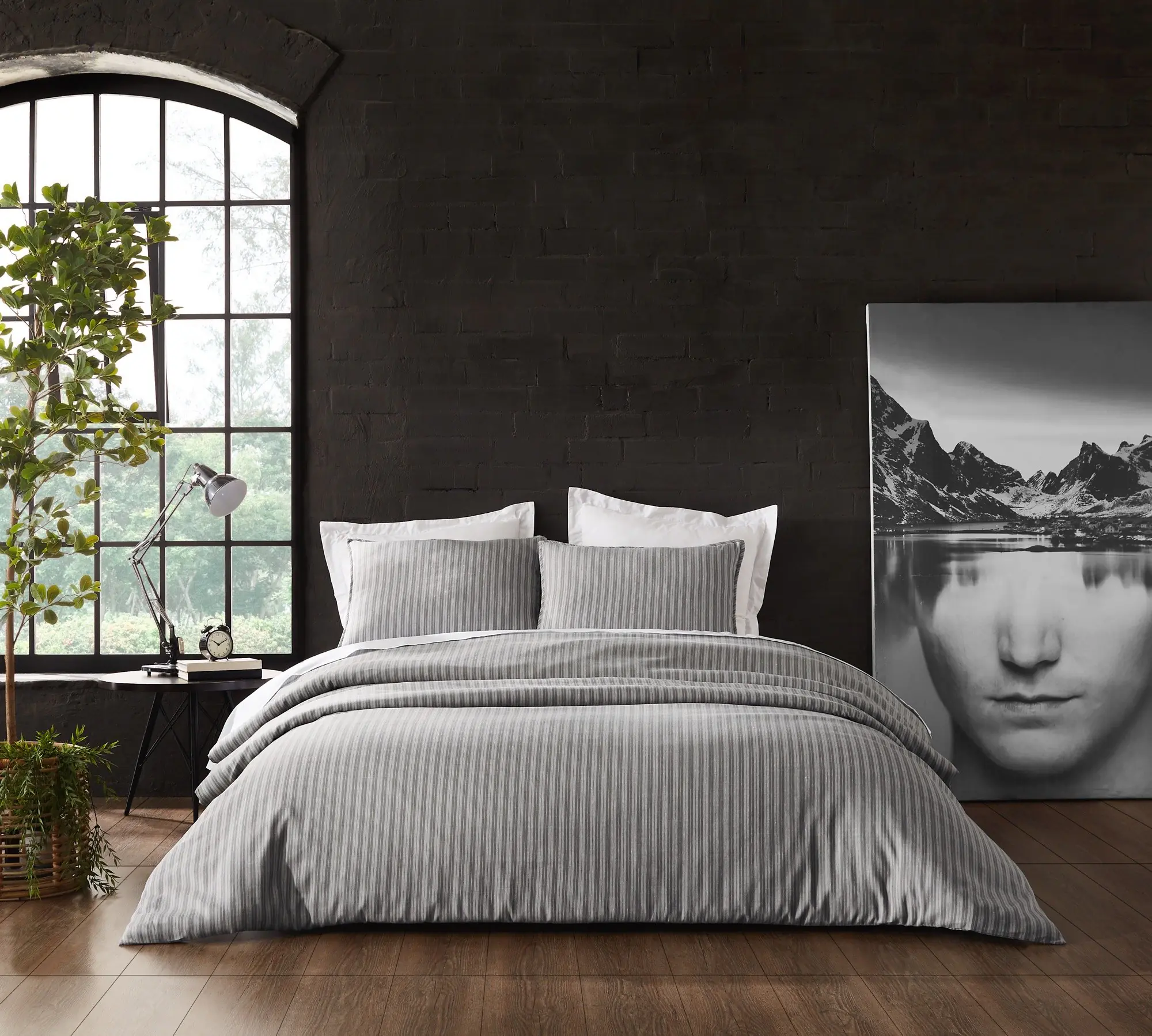
You spend one-third of your life in bed. That's roughly 26 years — more if you factor in late-night reading, weekend mornings, and everything in between. People spend weeks selecting a sofa they'll sit on for three hours a day. Then they throw inexpensive sheets on their bed without a second thought.
That's not a budget decision. That's a quality-of-life decision made on autopilot. And it's one of the easiest things you can change.
Luxury bedding sets are not a status symbol. They are a purposeful investment in better sleep, better mornings, and a bedroom that actually restores you. This complete pillar guide covers everything — from fabric science to styling strategy to care routines — so you can buy once, buy right, and never think about your bedding again (except to enjoy it).
What Are Luxury Bedding Sets? (And What They Are Not)
Let’s establish the truth first. Luxury bedding is not simply expensive bedding. Price alone tells you nothing. Some brands sell $400 sheet sets made from mediocre cotton with inflated thread count claims. Conversely, some genuinely exceptional bedding is available at honest prices from brands who cut out the retail markup.
Real luxury bedding is defined by four pillars:
- Pure, long-staple natural fibers — Egyptian cotton, European linen, Mulberry silk, TENCEL™ Lyocell. Not fiber blends, not “cotton-rich,” not polyester-cotton composites.
- Honest thread count — A genuine 400–600 TC single-ply sheet outperforms any 1,200 TC multi-ply sheet. Multi-ply counting is a common industry inflation tactic. Real luxury brands never inflate.
- Expert construction — Double-stitched hems. Corner mitering. Deep pockets (18–21 inches). Color-fast reactive dyeing. Seams that hold after 200 washes.
- Third-party certification — OEKO-TEX Standard 100, GOTS (Global Organic Textile Standard), Fair Trade. These verify what is NOT in your bedding — no residual pesticides, no harmful dyes, no chemical finishing agents.
💡 Expert Insight: The Thread Count Myth
Thread count became a marketing metric, not a quality metric. When brands twist two yarns together and count each thread as separate, a “1,200 TC” sheet actually has 600 physical threads per square inch — no different from a genuine 600 TC. The weave quality, staple length, and finishing process matter far more than the number on the packaging. If a brand leads with thread count instead of fiber origin, that is usually a signal.
Types of Luxury Bedding Sets
A luxury bedding set is not a single product category. It is a layered system. Understanding the types available lets you build the sleep environment that works specifically for your body, your climate, and your aesthetic.
1. Sheet Sets: The Foundation Layer
Sheets are the layer your skin spends the most time touching. They deserve the most scrutiny. When evaluating luxury sheet sets, the fabric type matters more than any other specification.
Choosing the right sheet fabric is a science unto itself. Amity Home’s guide on the 5 best bedding materials for luxury sheets breaks down each fiber’s performance characteristics across temperature regulation, durability, and tactile feel — a must-read before your next sheet purchase.
Fabric | Feel | Best Climate | Durability | TC Sweet Spot |
Long-Staple Egyptian Cotton | Crisp, softens with washing | All climates | Excellent — softens over years | 400–600 TC |
European Linen | Textured, breezy | Hot & humid | Exceptional — lasts decades | N/A (GSM 180–250) |
Sateen Cotton | Silky, luminous sheen | Cooler rooms | Good | 300–500 TC |
Percale Cotton | Crisp, matte, cool | Hot sleepers | Excellent | 200–400 TC |
TENCEL™ Lyocell | Silky, moisture-wicking | Hot & sensitive skin | Good | 300–500 TC |
Mulberry Silk | Ultra-smooth, protein-rich | Year-round | Moderate with care | 19–25 momme |
2. Duvet Covers & Sets: The Design Statement
The duvet cover is the most visible element of your bed. It sets the aesthetic tone for the entire bedroom. A well-chosen duvet cover in the right material can transform a plain room into something that looks like a boutique hotel suite.
Not all duvet covers are created equal. Amity Home’s curated selection of best luxury duvet covers in 2026 showcases the full range of construction options — from classic cotton sateen to textured jacquard — with expert pairing advice for different bedroom styles.
What separates a luxury duvet cover from a standard one:
- Interior ties at all eight corners (prevents insert bunching)
- Hidden button or zipper closure (clean visual finish)
- Baffle-box or channel stitching option for filled comforters
- Weight-appropriate fabric so the cover does not billow or drag
- Precise dimensional sizing so king covers actually fit king inserts
3. Quilts: Structure, Warmth & Visual Depth
A quilt differs from a duvet in one fundamental way: the fill is sewn directly into the cover fabric, creating a single unified piece. This makes quilts easier to care for and gives them a flatter, more tailored look on the bed.
Quilts work exceptionally well as a top layer in warmer climates, as a mid-layer in a full bedding stack during winter, or as a standalone summer cover. The stitching patterns — from simple channel quilting to intricate medallion designs — add visual texture without requiring additional styling.
When shopping for luxury quilts, look for:
- Fill weight appropriate for your climate (lighter for warm months, heavier for cold)
- Even stitching with no puckering or missed rows
- Consistent fill distribution (hold up to light to check)
- Pre-washed fabrics that will not shrink significantly after purchase
4. Matelasssé Coverlets: The Artisan Layer
Matelasssé (pronounced mat-luh-SAY) is one of the most underappreciated forms of luxury bedding. The word comes from the French “matelasser,” meaning to cushion or pad. The distinctive double-woven, raised texture is created on a jacquard loom — a heritage weaving technique that predates the industrial era.
This technique creates bedding that has genuine visual depth without any fill, making it one of the most versatile pieces in a bedroom. For an in-depth look at how matelasssé is made, how it differs from quilts and woven blankets, and how to style it for different interiors, Amity Home’s ultimate guide to matelasssé coverlets is the most comprehensive resource available.
Matelasssé shines in these design contexts:
- Traditional and transitional interiors where texture does the decorative work
- Monochromatic rooms where surface depth adds interest without pattern
- Guest rooms that need a polished, hotel-quality look year-round
- Summer beds where a flat, lightweight topper replaces a duvet
5. Comforters & Inserts: The Warmth Engine
The fill inside your bedding system determines your thermal comfort. Luxury comforters use either natural fills (European white duck or goose down, feathers) or high-performance synthetic alternatives (often OEKO-TEX certified polyester that mimics down behavior without the allergen risk).
Key fill specifications to evaluate:
- Fill power — measures loft (600+ FP for quality down; 800+ FP for premium)
- Fill weight (grams per square meter) — determines warmth level
- Baffle-box vs. sewn-through construction — baffle boxes prevent cold spots
- Shell fabric quality — tightly woven covers prevent fill escape
- Hypoallergenic certification — essential for allergy-prone sleepers.
6. Bedspreads: The Full Coverage Option
Unlike duvets and quilts which stop at mattress edge or slightly below, bedspreads are designed to reach the floor on three sides. They serve a dual purpose: full bed coverage and an alternative to using a separate bed skirt. In formal or traditional bedrooms, a tailored bedspread creates a cleaner silhouette.
Fabric Science: What Your Bedding Is Actually Made Of
The fiber composition of your bedding determines nearly every quality you care about: softness, breathability, durability, care requirements, and how the fabric ages. This is where most shoppers underinvest their research time.
Egyptian Long-Staple Cotton: The Benchmark
Cotton is graded by staple length — the length of each individual fiber. Longer fibers create fewer splice points per inch, resulting in a smoother, stronger thread. Egyptian cotton, grown in the Nile Delta, produces some of the longest staple lengths in the world (38mm+).
What this means in practice: the bedding gets noticeably softer with every wash, not rougher. Pilling is minimal because the long fibers have no short ends to break loose. Colorfastness is superior because the fiber accepts reactive dye more deeply.
What to watch for: Many brands label bedding as “Egyptian cotton” when the blend contains as little as 5% Egyptian cotton alongside shorter-staple varieties. Look for “100% long-staple Egyptian cotton” or “Extra-Long Staple (ELS) cotton” labeling.
European Linen: The Long Game
Linen is made from flax plant fibers. European linen — particularly from Belgium, France, and the Netherlands — benefits from ideal growing conditions: cool, wet climate and mineral-rich soil that produces fine, strong flax stems.
Linen’s reputation for being rough is outdated. Modern washed linen is soft from the first use, with a characteristic texture that is completely different from cotton but equally comfortable once experienced. It regulates temperature exceptionally well — it warms in winter and cools in summer by actively wicking moisture from the body.
For those managing sensitive skin conditions or preferring natural fiber bedroom environments, Amity Home’s resource on how to care for luxury linen at home covers washing, drying, storage, and longevity practices specific to linen bedding.
Mulberry Silk: The Skin-Kind Option
Mulberry silk is protein-based, making it the closest thing to human skin among all natural fibers. The amino acids in silk are biologically compatible — this is not marketing language but textile biochemistry. The result: silk creates significantly less friction against facial skin and hair, a measurable benefit for those concerned with overnight skin and hair health.
Silk is measured in momme (mm) rather than thread count. 19–22 momme is the sweet spot for bedding: durable enough to withstand regular washing while retaining the characteristic smooth weight that makes silk feel genuinely special.
TENCEL™ Lyocell & Bamboo-Derived Fibers: The Sustainable Innovation
TENCEL™ Lyocell is produced in a closed-loop manufacturing process in which the solvent is recycled at 99%+ efficiency. The fiber is derived from sustainably sourced wood pulp (eucalyptus) and produces bedding that is naturally smooth, moisture-wicking, and gentle on sensitive skin.
Bamboo-derived fabrics (viscose, rayon, or lyocell from bamboo) share similar properties but manufacturing methods vary widely in environmental impact. Look for OEKO-TEX certification to ensure the processing solvents used were handled responsibly.
What are the features of Luxury Bedding Set Features
When shopping online, you can’t touch the fabric. Look for these features to spot genuine luxury bedding sets:
| Feature | Good Sign | Red Flag |
|---|---|---|
| Thread Count | 300-600 TC single-ply | Anything above 800 TC |
| Fiber Label | “100% long-staple cotton” | “Cotton-rich” or “premium cotton” |
| Pocket Depth | 15-21 inches clearly stated | No pocket depth listed |
| Certifications | OEKO-TEX, GOTS, Fair Trade | No third-party certification |
| Finishing | Perfect corners, double hem | Raw edges, single-stitch hems |
| Color Process | Reactive dyeing | Pigment printing only |
| Warranty | 2-5 year guarantee | No returns after washing |
One feature nobody talks about: pill resistance.
- Low-quality cotton breaks under friction. It creates those annoying fabric balls within weeks.
- Real long-staple cotton and quality linen resist pilling. The fibers are too long to break loose easily.
- If a brand won’t tell you the staple length of their cotton, that’s your answer.
The Best Luxury Bedding Sets for Hot Sleepers
Temperature dysregulation during sleep is one of the leading causes of disrupted sleep cycles. If you wake up too warm, kick off covers at 2am, or regularly flip the pillow to find the cool side — your bedding is likely contributing to the problem.
Amity Home’s dedicated guide on best sheets for hot sleepers identifies the specific combinations of fiber, weave, and thread count that create optimal airflow. The short version: percale weave in long-staple cotton is the gold standard, followed closely by European linen and TENCEL™.
The key factors that determine whether bedding sleeps cool:
- Fiber type — Natural fibers outperform synthetics. Linen and percale cotton allow the most air circulation.
- Weave structure — Percale (one-over-one-under) creates open air pockets. Sateen traps more warmth due to its denser surface.
- Thread count — Paradoxically, lower TC in natural fibers often sleeps cooler. Higher TC creates denser, less breathable fabric.
- Finish treatments — Avoid bedding with heavy chemical finishing treatments that seal the fabric pores.
- Fill type — Down alternative fills and baffle-box construction allow airflow through the comforter, unlike solid polyester fills.
The Hotel Bedding Secret
Five-star hotels don’t use 1,000 thread count sheets. They use 300–400 TC percale in long-staple cotton — crisp, cool, and consistently comfortable at all body temperatures. The luxurious feel comes from the fiber quality and the industrial laundering process that softens without degrading. Replicating this at home means buying the right fabric, not the highest thread count.
Sizing Guide: King, Super King, Queen & Beyond
Bedding sizing is one of the most overlooked details in luxury bedding purchases. A king duvet on a standard queen bed hangs unevenly. A queen fitted sheet on a deep-pocket mattress (anything over 14 inches) won’t stay on through the night. Getting sizing right is not optional — it directly affects how the bed looks and how comfortably you sleep.
The difference between standard and oversized bedding deserves serious attention. Amity Home’s guide on king vs. super king sizing — why oversized bedding matters explains why many people who think they have a king bedding “problem” actually have a sizing mismatch, and how proper proportions transform the visual weight of a dressed bed.
Bed Size | Mattress Dimensions | Recommended Duvet Size | Fitted Sheet Pocket Depth |
Twin | 38″ × 75″ | Twin or Full/Queen | 12–15 inches |
Full/Double | 54″ × 75″ | Full/Queen | 12–15 inches |
Queen | 60″ × 80″ | Queen or King (for full drape) | 15–18 inches |
King | 76″ × 80″ | King (Oversized King recommended) | 18–21 inches |
California King | 72″ × 84″ | Cal King specific | 18–21 inches |
Super King | 72–80″ × 80–84″ | Super King / Oversized King | 21+ inches |
A note on deep-pocket mattresses: the surge in premium mattresses (memory foam, hybrid, pillow-top designs) has pushed average mattress heights from the traditional 10–12 inches to 14–16 inches, with some reaching 18+ inches. Standard fitted sheets — including many labeled “luxury” — are designed for 14-inch depths. If your mattress is deeper, confirm pocket depth before purchasing.
How to Layer Luxury Bedding Like an Interior Designer
The difference between a bed that looks professionally styled and one that looks flat is almost entirely a function of layering. Interior designers use a systematic approach to bedding composition — not guesswork.
The art of making your bed look like a luxury hotel room is learnable. Amity Home’s guide on 7 ways to style your bed like a five-star hotel translates professional staging techniques into practical bedroom application.
The five-layer system used by interior designers:
Layer | Piece | Purpose |
Layer 1 (Base) | Fitted sheet | Clean foundation, stays smooth |
Layer 2 | Flat sheet (optional) | Protects duvet, adds visual fold-back |
Layer 3 (Main) | Duvet or quilt | Primary warmth and visual anchor |
Layer 4 (Texture) | Matelasssé coverlet or throw | Adds depth, folded at foot of bed |
Layer 5 (Styling) | Shams, Euro pillows, accent cushions | Height, proportion, design interest |
The most common layering mistakes:
- Using a flat sheet as the visible top layer without a duvet or quilt above it
- Over-stacking decorative pillows so the bed looks cluttered, not luxurious
- Choosing a throw that doesn’t coordinate with the duvet’s texture or weight
- Forgetting the foot of the bed — a folded matelasssé coverlet here adds significant visual polish.
How to Pick the Best Luxury Bedding Sets (Simple Steps)
The best luxury bedding sets for you depend on what you need.
- Pick the right fabric, such as cotton, silk, or bamboo.
- Know what thread count is, and 300–600 is the best range.
- If you live in a warmer part of the US, choose options that let air flow. Choose bedding that is warmer for colder areas.
- Find out if the bedding is easy to clean and take care of.
- Make sure the design goes with the style of your bedroom.
This guide to buying luxury bedding makes your choice easier. It also tells you how to choose high-end bedding sets that work well.
Before you buy, always know what to look for in high-quality bedding.
Color, Pattern & Palette: Making Bedding Work With Your Room
Bedding color selection is not merely an aesthetic decision. It affects the perceived size of a room, the quality of light within it, and your subconscious sense of calm or stimulation when you enter the space. Interior designers think of the bed as the “anchor piece” from which all other room decisions flow.
The question of bold versus neutral bedding palettes is one of the most common decisions buyers face. Amity Home’s guide on bold vs. neutral: curating the right bedding palette provides a practical framework for choosing colors based on room light, floor finish, wall color, and personal temperament.
Interior Style | Recommended Palette | Best Bedding Type |
Coastal / Hamptons | Soft blue, white, sand, greige | Linen duvet + white quilt |
Japandi / Wabi-Sabi | Sage, warm grey, terracotta, off-white | Linen or matelasssé coverlet |
Modern Glam | Ivory, champagne, deep charcoal, gold accents | Sateen duvet + velvet shams |
Traditional / Classic | Navy, hunter green, ivory, burgundy | Matelasssé + flat sheet + shams |
Eclectic / Maximalist | Deep jewel tones, patterns, texture mixing | Quilt + patterned duvet |
Minimalist | White, warm white, soft grey | Percale set, no patterns |
Organic Modern | Warm earth tones, rust, natural linen | Washed linen or textured quilt |
A practical rule for beginners: invest in a neutral base (white, ivory, or warm grey sheets and fitted set) and make design statements with your duvet cover or quilt. This allows you to update the look seasonally without replacing the entire bedding system.
Amity Home’s Luxury Bedding Collections
Amity Home builds its collections on a foundation of direct supply chain relationships with established textile hubs — regions where weaving knowledge is generational and quality control is not a checklist but a cultural standard. Every piece in the collection carries OEKO-TEX Standard 100 certification, meaning every component — thread, dye, elastic — has been tested against 100+ harmful substances.
Here are signature collections from the 2026 range:
Wilton Stripe Quilt Set
Classic horizontal stripes in warm earthy tones meet expert quilting in a set designed for versatility. The Wilton works equally well as a primary summer cover or as a layering piece beneath a heavier winter duvet. The weight is calibrated for year-round use in most US climates.
Best for: Transitional, coastal, and casual-sophisticated interiors. Pairs naturally with white percale sheets and a linen throw at the foot.
Tipton Matelasssé, Indigo Set
The jacquard-woven matelasssé technique gives the Tipton its characteristic dimensional texture — a raised pattern that catches light differently throughout the day. The deep indigo colorway reads as a rich, modern statement without trending toward bold or aggressive.
Best for: Contemporary and transitional rooms with warm wood tones. The indigo grounds a neutral room without competing with art or furnishings.
Reaves Duvet Cover Set
Understated is not the same as plain. The Reaves set demonstrates this perfectly. Soft grey with fine detailing that rewards close inspection, the Reaves is the choice for rooms where the architecture or furniture is doing the decorative heavy lifting. The bedding supports without competing.
Best for: Minimalist, Scandinavian, and modern interiors. Pairs with grey or white Euro shams and a textured throw in a complementary neutral.
Orfeo Linen Comforter Set
Pure linen comforters remain genuinely rare in the luxury bedding market. Most linen bedding stops at coverlets and sheets. The Orfeo goes further — a linen-wrapped comforter available in White/Grey and White/Natural that combines the thermal intelligence of linen with the warmth of a filled comforter.
The border detailing is precise without being fussy. This is bedding made for people who understand quality without needing it announced.
Best for: Organic modern, Japandi, and coastal interiors. Works in any climate due to linen’s natural temperature-regulating properties.
Madison Quilt, Indigo Set
Where the Tipton Matelasssé uses woven texture for depth, the Madison Quilt uses pattern and color. Deep indigo with dimensional quilting creates instant visual interest without requiring additional styling effort. This is the bedding for a room that needs one strong statement and nothing else.
Best for: Bold contemporary interiors. Pair with crisp white sheets and a single white Euro sham to let the indigo quilt do the work.
How to Care for Luxury Bedding: Making Your Investment Last
The single most common way luxury bedding loses its quality prematurely is incorrect washing. Natural fibers require specific handling — not because they’re fragile, but because heat, harsh detergents, and mechanical stress break down the very structures that make them feel luxurious.
A complete linen care routine for home — covering washing temperatures, drying methods, ironing, storage, and refresh cycles — is available in Amity Home’s detailed guide on how to care for luxury linen at home. The principles apply broadly across natural fiber bedding.
Fabric | Wash Temp | Detergent | Drying | Special Notes |
Egyptian Cotton | Cold–30°C | Mild, pH neutral | Low heat or air dry | Avoid bleach; softens further with each wash |
Linen | Cold–40°C | Mild, no optical brighteners | Air dry preferred | Expect initial shrinkage; size accordingly |
Sateen Cotton | Cold wash only | Gentle cycle, mild detergent | Low heat tumble dry | Turn inside out; preserves sheen |
Mulberry Silk | Hand wash or delicate cycle | Silk-specific pH neutral | Air dry flat, no direct sun | Never wring; store away from light |
TENCEL™ Lyocell | Cold wash | Mild, no fabric softener | Low heat or air dry | Fabric softener reduces moisture-wicking |
Matelasssé | Cold, gentle cycle | Mild detergent | Low heat, reshape while damp | Do not iron raised pattern |
Beyond washing: rotate two sets of sheets so each set gets equal use. Replace fitted sheets before they become too thin at stress points. Store bedding in breathable cotton bags rather than plastic, which traps moisture and promotes mildew.
The True Cost of Luxury Bedding: Why Cheap Bedding Is More Expensive
This is the calculation most buyers skip. The upfront price of luxury bedding feels higher than budget alternatives. Assessed over the actual lifespan of the product, the math reverses dramatically.
Category | Price Range | Lifespan | Annual Cost | Notes |
Fast home goods (mass market) | $40–$80 | 12–18 months | $32–$80/year | Often pills, fades, loses shape |
Mid-market (decent quality) | $100–$200 | 3–5 years | $20–$67/year | Reasonable quality, limited warranty |
Luxury bedding sets (quality brands) | $200–$500 | 7–12 years | $17–$71/year | Improves with washing; often guaranteed |
Heirloom quality (linen, fine cotton) | $400–$900 | 15–25+ years | $16–$60/year | Linen especially becomes an asset over time |
The calculation does no include the non-financial costs: the nightly frustration of scratchy or pilling sheets, the aesthetic drag of faded or misshapen bedding, and the cumulative effect of poor sleep quality on daytime functioning.
📊 Sleep Science Note Research published in sleep medicine literature consistently links sleep environment quality — including tactile comfort and thermal regulation — with sleep onset latency and slow-wave (deep) sleep duration. Your bedding is a variable in your sleep architecture, not just a decoration. Upgrading from poor-quality synthetic bedding to properly breathable natural fiber bedding can reduce the time it takes to fall asleep and improve the depth of rest you achieve. |
The Definitive Luxury Bedding Buying Guide: 7 Questions to Ask Before You Buy
Online bedding purchases are made without touching the fabric. This makes the buying process entirely dependent on reading descriptions correctly and knowing what questions to ask. Here is the framework:
Question 1: What is the fiber origin?
Not just “Egyptian cotton” but where specifically was it grown and processed? Long-staple and extra-long staple designations matter. Fiber origin is the single most important quality determinant.
Question 2: Is the thread count single-ply?
Ask explicitly. A single-ply 400 TC is superior to a multi-ply 800 TC. If the brand cannot answer this, treat it as a red flag.
Question 3: What certifications does the product carry?
OEKO-TEX Standard 100 is the baseline. GOTS certification indicates organic fiber standards from farm to finished product. Fair Trade certification addresses labor conditions. Look for at least one of these on any luxury purchase.
Question 4: What is the fitted sheet pocket depth?
Measure your mattress height before purchasing. Include any mattress topper. Then add 2 inches to your measurement for the tuck under the mattress. Most luxury brands offer at least 15 inches; look for 18–21 inches if you have a deep mattress.
Question 5: What is the return policy for washed items?
Luxury bedding must be washed to experience its true quality. Brands that stand behind their product offer returns after the first wash. Brands that do not are protecting themselves, not you.
Question 6: Is the color reactive-dyed or pigment-printed?
Reactive dyeing penetrates the fiber at a molecular level. It is significantly more colorfast and fades gracefully rather than patching or cracking. Pigment printing sits on the surface and deteriorates faster with washing.
Question 7: Does the brand offer sizing transparency?
Before checkout, confirm the actual finished dimensions of the product, not just the size label. A “king” duvet can vary by 4–6 inches across brands, which is the difference between a beautifully draped bed and one that looks underdressed.
Luxury Bedding Trends 2026: What the Interior Design World Is Moving Toward
Understanding trend direction helps you make purchases that won’t feel dated within a year — and helps you identify pieces that will hold their aesthetic relevance across multiple design cycles.
Texture Over Pattern
The maximalist pattern trend of 2020–2022 is giving way to textural sophistication. Matelasssé coverlets, waffle-weave throws, and embossed quilts are replacing busy printed designs as the primary way to add visual interest. The surface complexity is tactile, not graphic.
Earth Tones Maturing Into Refined Palettes
The millennial beige moment is evolving. Terracotta is giving way to deeper, more complex earthy tones — warm umbers, aged olive, dusty slate, and natural flax. These palettes support a more sophisticated aesthetic without the coldness of pure minimalism or the visual noise of maximalism.
Sustainable Luxury as the New Standard
OEKO-TEX and GOTS certifications are transitioning from differentiators to baseline expectations. Buyers increasingly ask for them as standard, not as premium features. Brands that do not offer certified bedding will face increasing credibility challenges in the luxury segment.
Oversized Everything
Oversized bedding — king duvets on queen beds, extra-deep fitted sheets, generously draped throws — creates the full, hotel-quality look that social media and interior design content have normalized. The trend is driven by the visual language of staged bedrooms and by consumers who have noticed that “correctly sized” often looks underwhelming in practice.
Quiet Luxury Aesthetic
Borrowed from fashion, the quiet luxury concept in bedding means: no logos, no branding, no ostentatious pattern. Quality expressed through material and construction alone. This is the aesthetic that positions brands like Amity Home well — pieces that look expensive without announcing themselves.
Conclusion: The Bed You Deserve
Your mattress cost hundreds or thousands of dollars. You researched it. You tested it. Then you covered it with sheets that probably came in a package with a picture of clouds on the front.
Luxury bedding is the single most high-contact, high-frequency element of your home environment. You interact with it more than any piece of furniture you own. It affects your sleep quality, your skin, your morning energy, and how your bedroom looks and feels every day.
Amity Home’s collections represent the intersection of heritage textile craft and honest modern standards — OEKO-TEX certified, properly sized, and designed for rooms that look like they were considered, not assembled. Whether you are building a complete bedding system from scratch, replacing worn-out sheets, or layering in a matelasssé coverlet to add depth to an existing set, the investment calculates itself over the years it will serve you.
The bed you sleep in every night should be the best-appointed space in your home.
Frequently Asked Questions About Luxury Bedding Sets
Q1: What thread count is considered luxury bedding?
Genuine luxury bedding typically falls in the 300–600 thread count range for single-ply constructions. Above 600 TC, quality improvements become negligible, and many brands achieve high numbers through multi-ply counting that inflates the number without improving the fabric. For linen bedding, thread count is less relevant than GSM (grams per square meter), with 180–250 GSM being the quality range.
Q2: What is the difference between a duvet and a comforter?
A duvet is a soft insert (filled with down, feathers, or synthetic alternatives) designed to be used inside a removable duvet cover. The cover is washed regularly; the insert is washed less frequently. A comforter is an all-in-one piece where the fill is sewn directly into the outer shell — it functions as both the cover and the fill. Duvets offer more flexibility for washing and seasonal style changes; comforters are simpler to manage.
Q3: How often should luxury bedding be washed?
Sheets and pillowcases: every 1–2 weeks. Duvet covers: every 2–4 weeks. Quilts and matelasssé coverlets: every 1–3 months. Duvet inserts and comforters: every 3–6 months (or more frequently if used without a top sheet). Washing too frequently can break down delicate fibers over time; washing too infrequently allows oils, sweat, and dust mites to accumulate. Always follow the specific care label on your bedding.
Q4: Is Egyptian cotton actually better than regular cotton?
Genuine long-staple Egyptian cotton is measurably superior to standard short-staple cotton in three ways: the fabric is softer because longer fibers create smoother yarn, it is more durable because fewer fiber ends mean less pilling and breaking, and it accepts dye more deeply for better colorfast results. However, the label “Egyptian cotton” is widely misused. Always look for “100% long-staple” or “Extra-Long Staple (ELS)” in the product specifications, not just the country of origin.
Q5: What is the best bedding for hot sleepers?
Hot sleepers benefit most from percale-weave cotton (the one-over-one-under weave creates maximum airflow), European linen (which actively wicks moisture and regulates temperature), and TENCEL™ Lyocell (engineered moisture management in a silky hand). Sateen weave, while luxurious in feel, traps more warmth due to its denser surface structure. Synthetic fills and polyester blends should be avoided, as they trap body heat significantly more than natural fibers.
Q6: How do I know if a duvet cover will fit my duvet insert?
The duvet cover should be sized to match or be slightly larger than your insert — typically 2–4 inches larger in each dimension. This prevents the insert from being compressed inside the cover, which reduces loft and warmth. Most standard inserts and covers from quality brands are sized to correspond (queen insert / queen cover). However, dimensional specifications vary between brands, so always compare actual finished measurements, not just size labels.
Q7: What does OEKO-TEX certification mean for bedding?
OEKO-TEX Standard 100 is an independent third-party certification issued by the OEKO-TEX Association, testing every component of a textile — thread, dye, finishing treatment, elastic, zipper — against a list of over 100 harmful substances including pesticides, heavy metals, formaldehyde, and allergenic dyes. Products that pass receive a certification number that can be verified on the OEKO-TEX website. For anyone with sensitive skin, allergies, or children sleeping in the household, OEKO-TEX certified bedding removes a meaningful source of chemical exposure.
Q8: What is a matelasssé coverlet, and how is it different from a quilt?
Matelasssé is a woven textile technique — not a filled product. The raised, quilted-looking texture is created entirely by the loom using a double-weave or pique weave structure, without any batting, fill, or stitching. A quilt, by contrast, is made from three layers (top fabric, batting, backing fabric) sewn together with visible stitching. Matelasssé is typically lighter, has a more structured texture, and works particularly well in traditional and transitional bedrooms. It can be used alone as a summer coverlet or layered under a duvet in colder months.
Q9: How do I build a layered luxury bed without it looking overdone?
The key is restraint in number combined with quality in each layer. Start with a fitted sheet and flat sheet in a neutral. Add your primary quilt or duvet in your statement color or pattern. Fold a matelasssé coverlet or throw at the foot of the bed for texture depth. For pillows: two sleeping pillows in matching shams, two Euro shams behind them for height, and one or two accent cushions at most. More than five pillow elements typically tips into clutter rather than luxury.